SEO for HVAC Companies: How to Book More Service Calls From Google Without Managing It Yourself
A practical HVAC SEO guide: win the Google map pack, build service and maintenance-plan pages, time seasonal content, and choose who runs it.
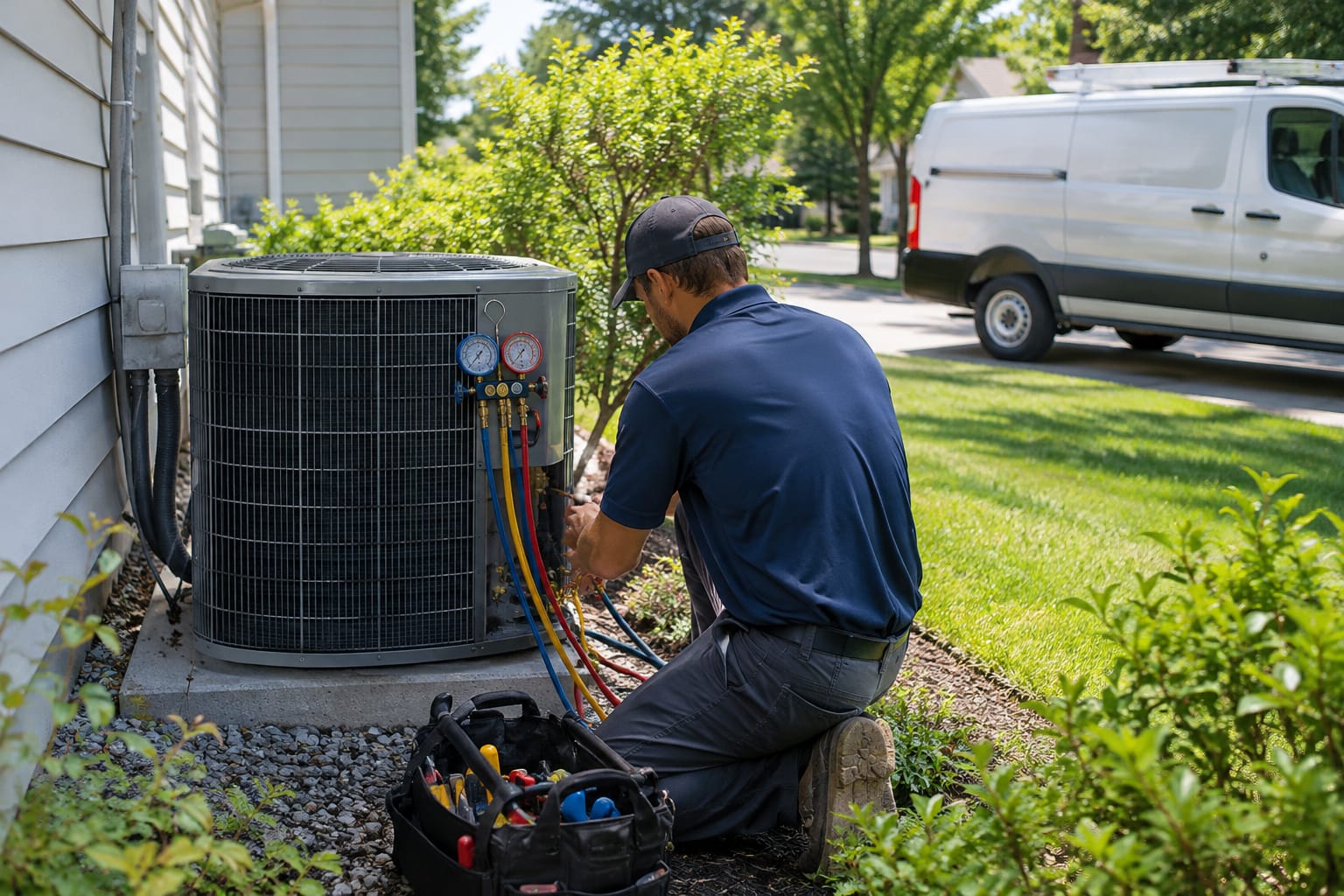
SEO for HVAC companies comes down to three jobs. First, appear in Google’s map pack for the exact service a homeowner needs. Second, give them a page that answers that need. Third, make calling you effortless on a phone.
The checklist itself is not the hard part. The hard part is finding hours for it during a July heat wave or a January cold snap. This guide covers what generic local SEO advice skips: seasonal timing, emergency searches, and maintenance-plan pages that turn one repair call into a repeat customer. It closes with an honest comparison of doing it yourself, hiring an agency, or running it on autopilot.
Disclosure: this article is published by SERP Agent, which makes AI SEO automation software. That software is one of the options compared below.
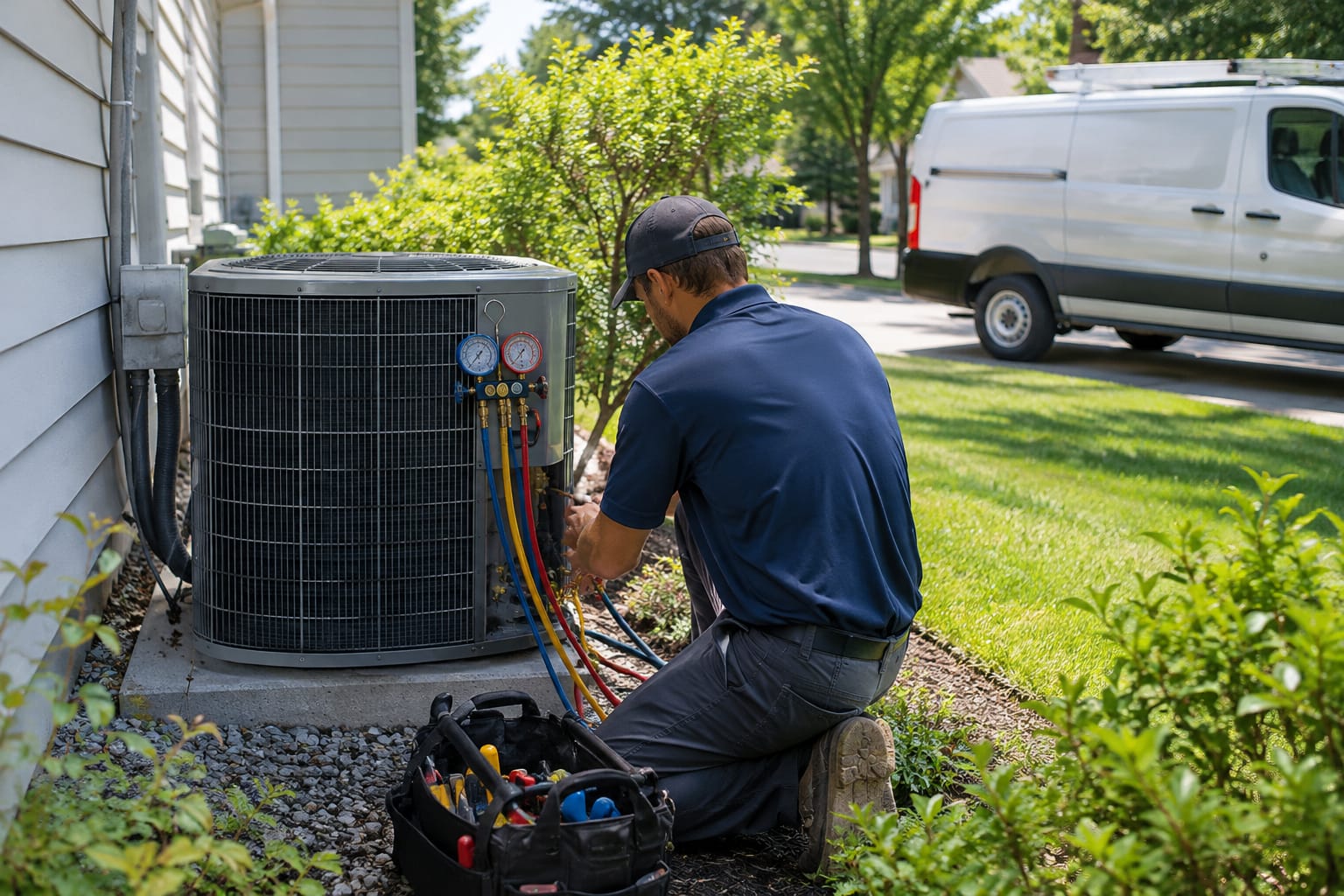
Key Takeaways
- Win the map pack first. Google ranks local listings on relevance, distance and prominence, so a complete Google Business Profile with an accurate service area and steady reviews is the foundation.
- One page per service, plus a maintenance plan page. Separate pages for AC repair, furnace repair and installation match how homeowners search. A maintenance plan page turns one-off repair callers into recurring customers.
- Publish ahead of the season. Cooling content goes live in late spring and heating content in early fall, so pages are indexed before demand peaks. Check local timing in Google Trends.
- Design for the emergency caller. Tap-to-call, hours and service area must be visible on the first mobile screen, because Google indexes the mobile version of your site.
- Pick the option you can sustain. DIY, an agency and autopilot software differ mainly in owner time and cost. Judge any of them monthly on Search Console data, profile calls and booked jobs.
The HVAC SEO Checklist in Eight Steps
Use this list to score where your company stands today. Each item is covered in detail in the sections below.
- Google Business Profile: verified and complete, with the right primary category, an accurate service area, and current hours.
- Service pages: one page for each core job, such as AC repair, furnace repair, installation and heat pumps.
- Maintenance plan page: a dedicated page that sells recurring tune-ups. Link it from every repair page.
- Seasonal timing: cooling content goes live in late spring and heating content in early fall, before demand peaks.
- Mobile-first contact: a tap-to-call button, your hours and your service area are visible without scrolling.
- Reviews: genuine Google reviews arrive steadily, and you reply to them.
- Consistent listings: the same business name, address and phone number appear on every directory.
- Monthly tracking: you check calls, map-pack visibility and AI assistant mentions every month.
Get Into the Map Pack: Your Google Business Profile and Service Area
HVAC companies appear in the Google map pack when three things line up. Their Google Business Profile matches the service searched. The searcher is in or near the covered area. The business looks established and well reviewed. The map pack is the block of local listings shown under a map.
Google calls those three factors relevance, distance and prominence in its guide to improving local ranking. You control relevance and prominence directly. You influence distance mostly by setting your service area honestly.
For relevance, choose the primary category that matches your main revenue, such as HVAC contractor. Then add secondary categories for the heating and cooling work you actually do. List each service in the profile with a plain description. Google reads those descriptions when it matches a profile to searches like “ac repair near me” or “furnace repair near me.”
Q: Should an HVAC company show its shop address on Google?
A: Only if customers visit it. Google’s guidelines for representing your business tell service-area businesses that serve customers at their homes to hide the address and set a service area instead.
Profile posts are underused in this trade. A short post about same-day AC repair availability in June gives searchers a fresh reason to call. So does a fall tune-up reminder in September.
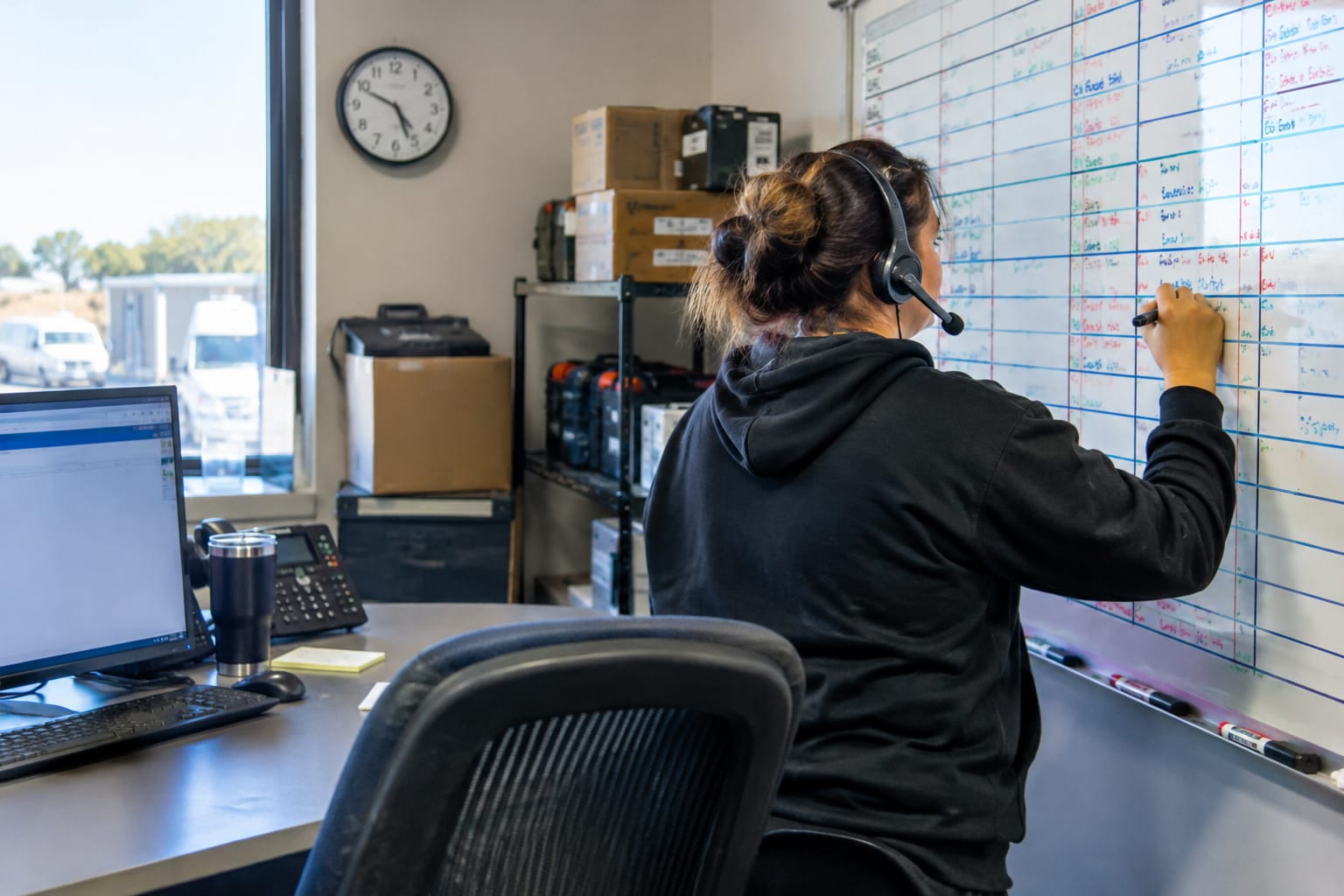
Build a Page for Each Service Homeowners Search For
A homeowner searching for “AC repair” and one searching for “furnace installation” want different jobs. They also expect different answers. A single “Services” page that lists everything rarely ranks well for either search, so give each core service its own page.
A strong service page answers what a nervous homeowner wants to know before calling:
- The symptoms this service fixes, in their words (“AC blowing warm air,” “furnace short cycling”).
- What the visit includes and how scheduling works.
- The towns and neighborhoods you cover.
- The equipment brands you service, financing if you offer it, and your warranty terms.
- A call button at the top and again at the bottom.
Google’s guidance on creating helpful, people-first content rewards exactly this kind of page: specific, written for the customer, and based on real experience. Adding LocalBusiness structured data helps Google read your hours, phone number and service area. The HVACBusiness type on Schema.org is the most precise label for this kind of business.
Maintenance plan pages turn repairs into recurring revenue
Most repair searchers call once and disappear. A maintenance plan page gives them a reason to stay. It also keeps your schedule full in the shoulder months between peak seasons.
The U.S. Department of Energy notes that an air conditioner’s filters, coils and fins need regular maintenance to keep it running efficiently. That is a credible reason to quote on your plan page. Spell out what your plan includes, how many visits it covers, and any member benefits you actually offer, such as priority scheduling. Then link to the page from every repair and installation page.
Plan Content Around the Seasons Before Demand Spikes
Publish cooling content in late spring and heating content in early fall. New and updated pages need time to be crawled, indexed and trusted. A page that goes live during the first heat wave is already late.
The pattern below fits most mixed-climate markets. Check your own region in Google Trends, because a Phoenix contractor and a Minneapolis contractor see very different curves.
| Window | What homeowners search | What to publish or update |
|---|---|---|
| Feb–Mar | Heat pump vs. furnace, system replacement questions, spring tune-ups | Replacement and heat pump guides, spring maintenance plan offer |
| Apr–May | AC tune-up, AC not cooling, new AC installation | Refresh AC repair and installation pages, add “before you call” troubleshooting tips |
| Jun–Aug | AC repair near me, emergency AC repair, AC blowing warm air | Profile posts on same-day availability, review requests after every job |
| Sep–Oct | Furnace tune-up, furnace repair near me, heating maintenance | Refresh furnace pages, fall maintenance plan push, heating safety content |
| Nov–Jan | Furnace not working, no heat, emergency heating repair | Emergency heating page, holiday and after-hours hours updated on your profile |
Pro Tip: Update your existing AC repair page each spring rather than publishing a new one. A page that has ranked for years keeps that history. Fresh symptoms, photos and FAQs give Google a reason to show it again.
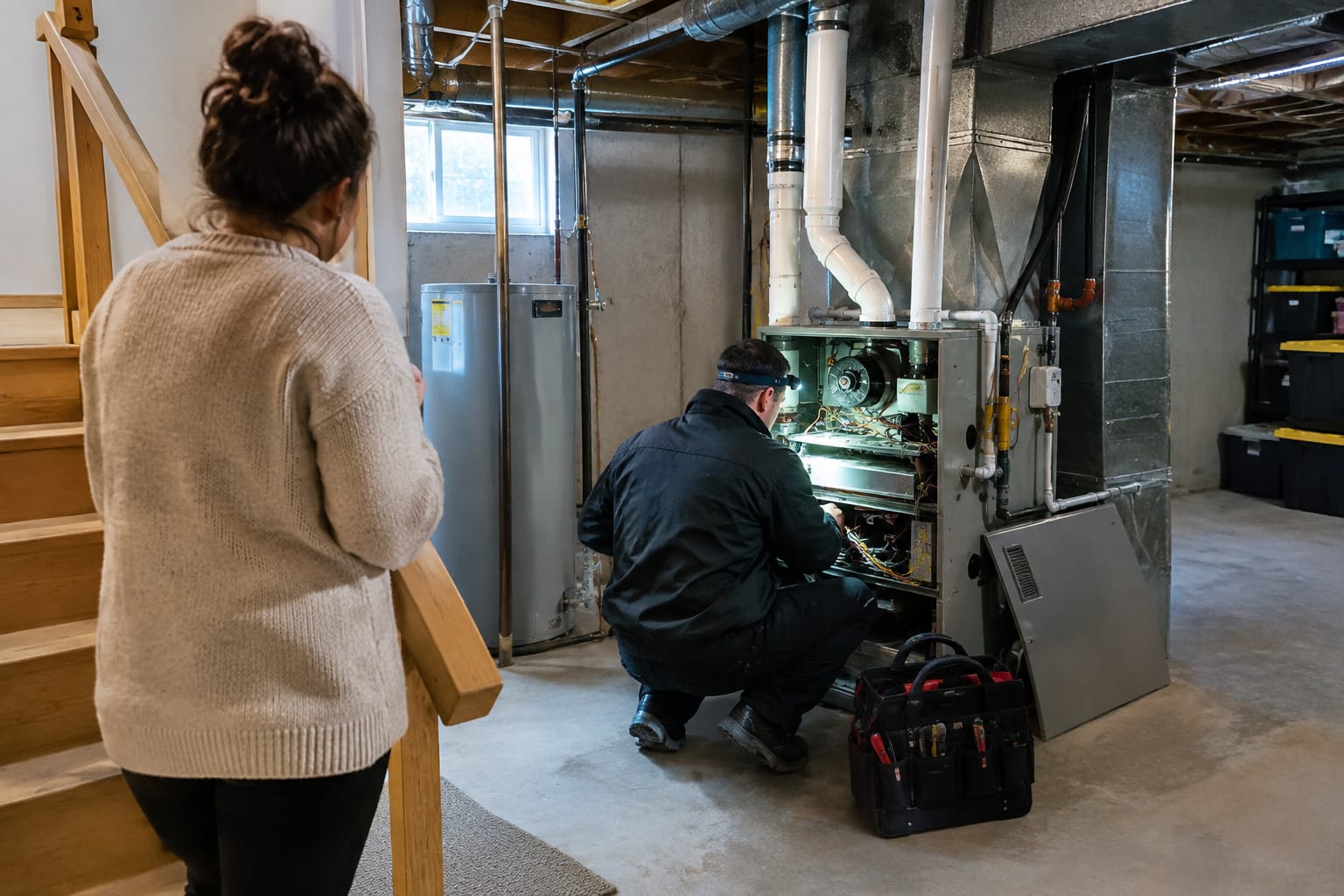
Make Your Site Work for Someone With a Broken AC on Their Phone
A homeowner with no heat at 9 p.m. decides in seconds, on a phone, often with one bar of signal. If your number, hours and service area are not visible right away, they go back and call the next listing.
Google uses the mobile version of your site for indexing and ranking. For an HVAC company website, the phone experience is the site. Google’s Core Web Vitals guidance explains how it measures loading speed and stability.
Check every service page on your own phone against this list:
- A tap-to-call button sits at the top of the page and stays visible while scrolling.
- Your hours, including emergency or after-hours availability, appear in the first screen.
- The service area is stated in plain words, not hidden in a footer.
- Pages load quickly on mobile data, without pop-ups covering the phone number.
- A short booking form works for people who prefer not to call.

Reviews, Citations and Trust Signals That Win the Call
Reviews decide both whether you appear and whether you get picked. Google states in the same local ranking guide that review count and review score factor into local search ranking.
The simplest system works best. Ask for a review when the job is done and the customer is happy. Send a short link by text the same day, and reply to every review, including the critical ones. Replies show the next homeowner how you handle problems.
Q: Can an HVAC company offer a discount in exchange for Google reviews?
A: Avoid it. The FTC’s 2024 final rule on fake reviews and testimonials bans offering incentives conditioned on a review expressing a particular sentiment. Ask every customer the same way, with no strings attached.
Citations are listings of your business on other sites, such as directories, local chambers and supplier dealer locators. Keep your name, address and phone number identical everywhere. Mismatched details make it harder for Google and AI assistants to confirm you are one real business.
On your site, show the trust signals homeowners look for. Technicians who handle refrigerant need EPA Section 608 certification, and saying so on your pages reassures customers. Contractor licensing rules vary by state, so list the license that applies where you work. Add proof of insurance and the warranties you offer.
Need help with this? Get started
Showing Up When Homeowners Ask ChatGPT or Google AI Overviews
AI assistants recommend HVAC companies based on many of the same signals Google uses. These include clear service pages, consistent business details, strong reviews, and mentions on other trusted sites. There is no separate trick for AI search. Strong local SEO is the foundation.
Google AI Overviews are the AI-written summaries that appear above regular search results. ChatGPT, Gemini and Perplexity answer similar questions in their own interfaces.
Q: Is there special optimization required to appear in Google AI Overviews?
A: No. Google’s documentation on AI features and your website says a page only needs to be indexed and eligible to show a snippet in Search. No extra technical requirements apply.
Treat AI visibility as an experiment you measure, not a promise anyone can make. Start by recording a baseline. Ask ChatGPT, Perplexity and Google questions your customers would ask, such as “best AC repair company in [your town]” or “who does furnace maintenance plans near [your town].” Repeat the same prompts every two weeks for eight weeks and note whether your company appears. Software built for tracking whether AI assistants recommend your company automates this across ChatGPT, Google AI Overviews, Gemini and Perplexity. Even then, a citation is never guaranteed.
Who Should Run It: DIY, an Agency or Autopilot, and How to Tell It’s Working
The right choice depends on how much owner time you can give SEO during peak season. For most HVAC owners, that is close to none. Here is how the three options compare.
| Do it yourself | Hire an agency | Autopilot software | |
|---|---|---|---|
| Owner time | Several hours every week, all year | Monthly calls, approvals, sharing job details | Reviewing and approving plans and drafts |
| Cost | Your time plus tool subscriptions | Monthly retainer, usually the highest of the three | Fixed monthly subscription |
| Main risk | Work stalls when the phones get busy | Results depend on the team assigned; check contract length | Still needs your input on real business facts |
| Best fit | Owners who enjoy marketing and have slow seasons | Larger companies that want a dedicated human team | Owners who want steady SEO work without managing it |
One reference point on cost: SERP Agent plans and pricing are listed starting at $199 per month per website as of October 2026. Billing is per project, and you can cancel anytime. The platform runs audits, strategy, content and publishing. It also offers automated Google Business Profile and map-pack tracking, including profile posts, listing consistency and citations.
No HVAC client results are available to share yet. The closest example comes from another local home-service business. A moving company running on autopilot grew from 770 organic clicks per month in February 2026 to 1,925 in July 2026. Its average Google position improved from 28.7 to 16.4, according to Google Search Console data. That is how a local moving company grew its search traffic. It is not an HVAC forecast.
Whichever option you choose, judge it on these measures every month:
- Search impressions and clicks for service queries in Google Search Console, the free tool that shows how Google sees your site.
- Calls and direction requests from your Google Business Profile performance report.
- Map-pack visibility for your main services, checked from several towns in your service area.
- Booked jobs by source. Ask every new caller how they found you.
- AI assistant mentions from the prompt tests described above.

Agency owners who serve HVAC clients can use the same checklist and measures as a delivery scope. The seasonal calendar matters just as much for the client’s calendar as for the content.
The bottom line is simple. Pick the option you will actually sustain through next summer and next winter. HVAC SEO compounds only when the work keeps happening during the months you are busiest.
Related Articles
- What Is AI SEO — how AI changes the work of getting found in search, explained in plain terms.
- How AI Search Is Rewriting the Rules of SEO in 2026 — what ChatGPT and AI Overviews mean for businesses that rely on Google.
- How to Read Google Search Console Like an Analyst — which reports show whether your SEO is producing real traffic.
Useful Links
- Local SEO Automation — Win the Google Map Pack
- GoBorn case study — booked out by search and cited by AI
- AI SEO — Full SEO on Autopilot
- Plans, Billing and Cancellation Terms
- SEO on Autopilot: Audit, Strategy and Daily Content
Need help with this? Local SEO Automation · Get started
Möchten Sie, dass das für Sie erledigt wird – jeden Tag?
Verbinden Sie Ihre Website, und SERP Agent übernimmt Audit, Content und Veröffentlichung im Autopiloten.