Map Pack SEO: Your Playbook to Win the Local 3-Pack
Learn map pack SEO step by step: optimize your Google Business Profile, build NAP citations, earn reviews, and track local 3-pack rankings by location.
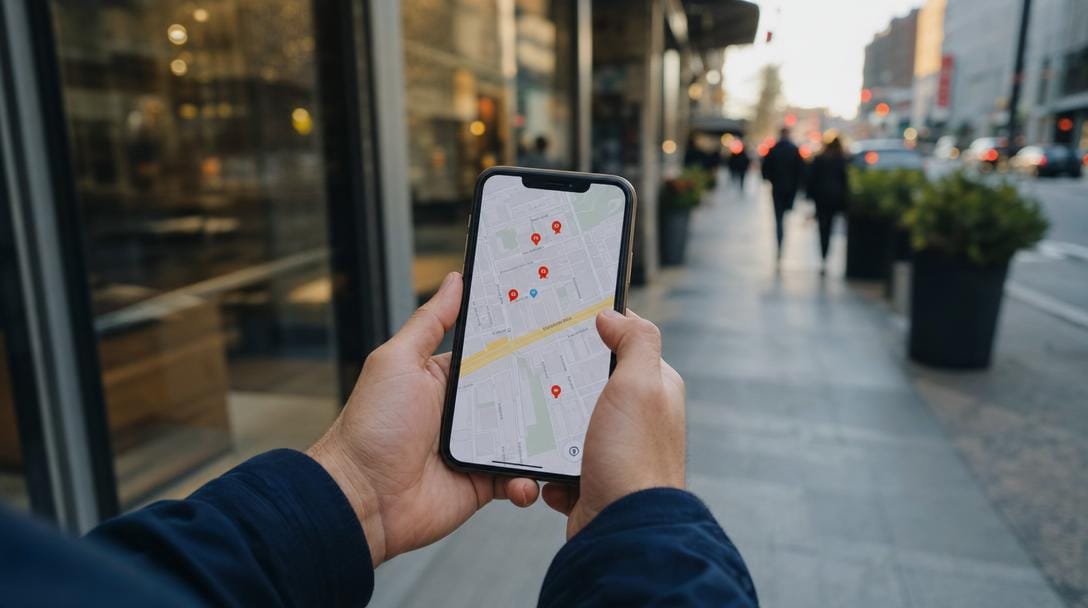
Map pack SEO is the practice of optimizing your Google Business Profile, citations, and reviews so your business appears in the local 3-pack — the three map listings Google shows above organic results for location-based searches. Rankings there come down to three signals Google weighs: relevance, distance, and prominence.
The map pack captures the bulk of clicks for "near me" and city-based queries. Most searchers never scroll past those three listings. This guide breaks down the exact steps to earn a spot, track your position neighborhood by neighborhood, and hold it when competitors slip.
What the Google Map Pack Is and Why It Wins Clicks
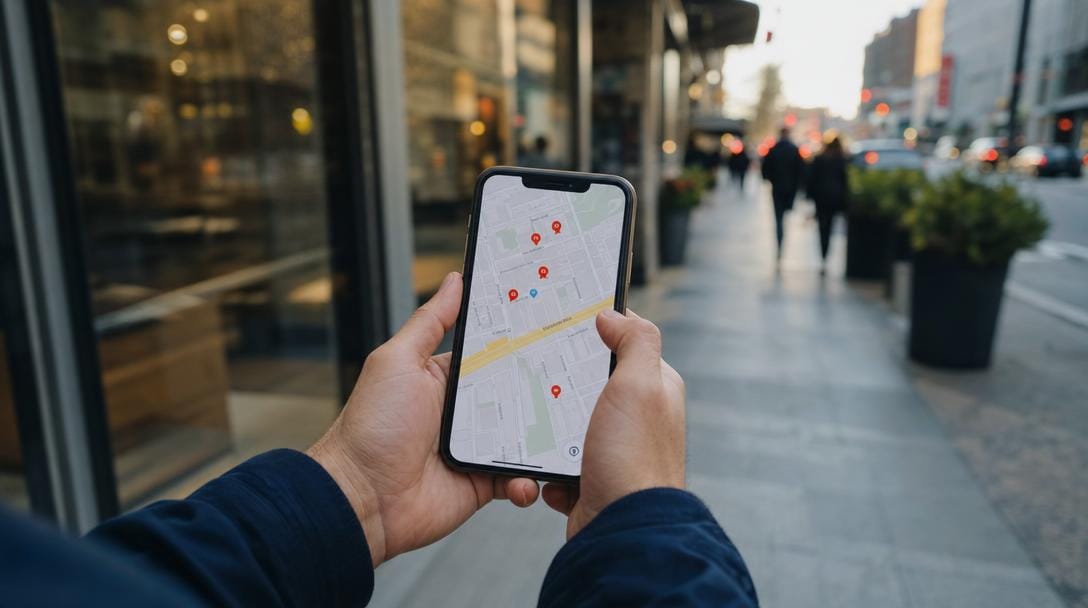
The Google Map Pack is the block of three business listings, paired with a map, that Google displays at the top of local search results. It's also called the local 3-pack, the local pack, or the google 3 pack. For any query with local intent — "plumber near me," "movers in Boston" — this is the first thing most people see.
Definition — Google Map Pack: A search feature showing three ranked business listings with a map, star ratings, hours, and directions, positioned above traditional organic links for location-based queries.
The map pack wins clicks because it sits above the fold and answers intent instantly. A search for "coffee shop near me" returns three vetted options with ratings, distance, and a tap-to-call button — no scrolling required. That prominence is why google map pack ranking is one of the highest-leverage plays in local marketing.
If search layouts are new to you, it helps to understand what a SERP actually is before optimizing for one feature inside it. The map pack is a single block on the results page; organic listings, ads, and AI Overviews surround it.
Q: What is the difference between the map pack and organic results?
A: The map pack shows three local business listings with a map and star ratings above the standard blue-link results; organic listings are website pages ranked below it.
Google confirms the local pack ranks on three inputs: relevance, distance, and prominence. Every tactic in this playbook maps back to one of those three levers.
Step 1: Claim and Fully Optimize Your Google Business Profile
Claim your Google Business Profile, verify it, and complete every field — primary category, services, hours, photos, and description. An incomplete profile rarely ranks, because Google can't confirm relevance from empty fields.
Your Google Business Profile is the foundation of the entire map pack. It's the entity Google matches against a searcher's query and location. Treat it like a landing page, not a directory listing.

Work through these fields in order of impact:
- Primary category — pick the single most accurate category; this drives most of your relevance.
- Secondary categories — add every service you genuinely offer.
- Services and products — list them with short descriptions containing your keywords.
- Business description — 750 characters describing what you do and where.
- Photos — exterior, interior, team, and work samples; profiles with fresh photos signal activity.
- Hours and attributes — accurate hours, plus attributes like "wheelchair accessible" or "free consultation."
- Products/booking links — connect your site actions where available.
Effective map pack optimization starts here because relevance is decided by how completely and accurately you describe the business. A half-filled profile competing against a complete one loses on relevance every time.
Pro Tip: Set your primary category to the term with the highest local search volume that still describes you accurately, then use secondary categories for the rest. A "moving company" primary with "storage facility" secondary outranks a business that buries its main service in a secondary slot.
Step 2: Build Consistent NAP Citations Across Directories
Publish your exact name, address, and phone (NAP) on major directories, and keep every listing identical. NAP consistency tells Google your business data is trustworthy, which feeds directly into prominence.
Local citations are mentions of your NAP on third-party sites — Yelp, Apple Maps, Bing Places, industry directories, and local chambers. Each consistent citation is a small vote of confidence. Each inconsistent one is a small doubt.
Q: Why does NAP consistency matter for the map pack?
A: Google cross-references your NAP across the web to verify legitimacy; mismatched addresses or phone numbers reduce confidence and suppress your local map ranking.
Prioritize citation sources by authority:
| Citation Source | Type | Priority |
|---|---|---|
| Google Business Profile | Core platform | Critical |
| Apple Maps / Bing Places | Major map engines | High |
| Yelp, Facebook | Broad directories | High |
| Data aggregators (Data Axle, Foursquare) | Distribution | Medium |
| Industry/niche directories | Vertical relevance | Medium |
| Local chamber / city listings | Geographic relevance | Medium |
The goal is not volume for its own sake. Twenty accurate, authoritative citations beat two hundred scraped ones. Audit existing listings first; old addresses and disconnected phone numbers are the most common source of inconsistency.
Pro Tip: Search your old phone number in quotes on Google. Any listing that surfaces with a wrong number is actively hurting your nap consistency — fix or delete it before building new citations.
Step 3: Earn and Respond to Reviews the Map Pack Rewards
Earn a steady flow of recent reviews and respond to every one. Review signals — quantity, velocity, rating, and keyword content — are among the strongest local search ranking factors Google uses for the map pack.
Reviews influence both rankings and conversions. The vast majority of consumers read online reviews before choosing a local business, so a strong review profile earns the click even after you rank. Recency matters as much as volume; ten reviews this quarter outweigh fifty from three years ago.

Respond to reviews within a day or two. Replies signal an active, legitimate business and give you a natural place to mention services and locations — reinforcing the topical authority that supports prominence. Respond to negative reviews calmly and factually; a measured reply often reads better than a five-star rating.
Build a simple, repeatable request system:
- Ask at the moment of peak satisfaction — right after a completed job.
- Send a direct review link by text; friction kills follow-through.
- Never gate or incentivize reviews; that violates Google policy and risks removal.
- Aim for a consistent monthly cadence rather than one-time bursts.
Serp Agent can help: Winning the local 3-pack takes consistent execution across profiles, citations, reviews, and tracking — every week, not once. Serp Agent runs that workflow on autopilot so you don't have to manage it by hand. Learn more →
Step 4: Optimize On-Page Signals for Local Relevance
Optimize your website's location pages, title tags, and schema so Google connects your site to the areas you serve. Strong on-page signals amplify relevance and reinforce everything your Google Business Profile claims.
Google maps SEO does not stop at the profile. Your website is a corroborating source. When your site clearly names your services and service areas, Google's confidence in your relevance rises.
Focus on four on-page elements:
- Title tags and H1s that include the service plus the city.
- Dedicated location pages for each market you serve, with unique content — not copied boilerplate.
- LocalBusiness schema with matching NAP, hours, and geo-coordinates.
- Internal links connecting service and location pages so authority flows through the site.
Embed a Google Map, add driving directions, and reference local landmarks naturally. These details give the page genuine geographic signal. According to BrightLocal's local search ranking factors research, on-page signals remain one of the most influential categories for map pack results.
Pro Tip: Give each service-area page a real reason to exist — a local case study, area-specific pricing note, or neighborhood FAQ. Thin "[city] + [service]" doorway pages with swapped city names get filtered and can trigger quality issues.
Step 5: Track Your Local SERP Positions by Location
Track your map pack rankings from multiple physical points, because local results change block by block. A keyword that ranks #1 at your storefront can sit off the pack a mile away.
This is where most guides stop short. They tell you to optimize, then never explain how to measure. Local serp tracking from a single location gives you a false read, because Google personalizes the pack by the searcher's exact coordinates.
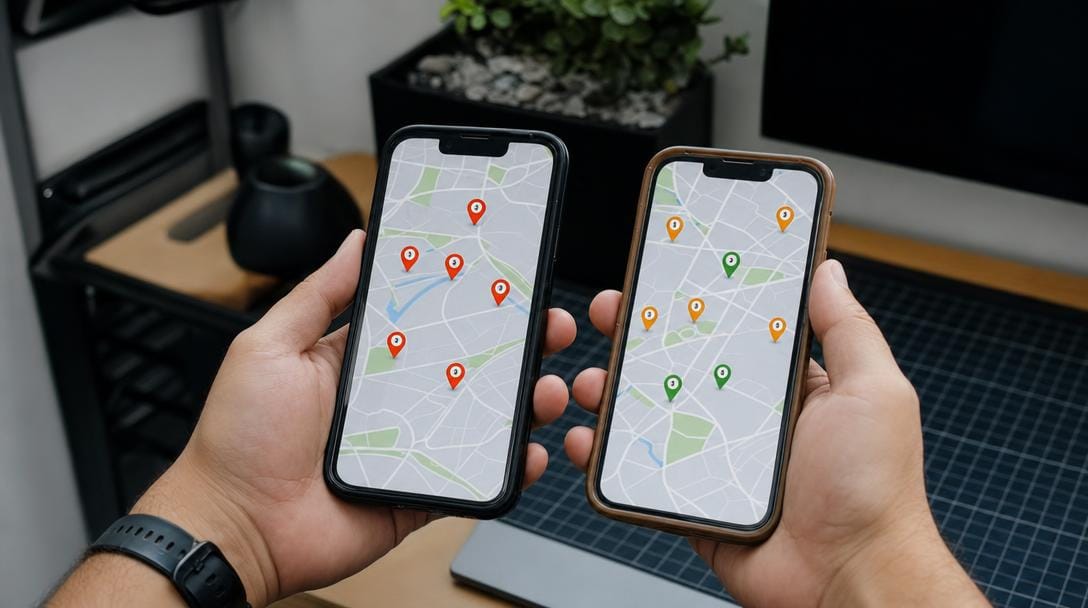
A proper local serp tracking workflow checks each priority keyword from a grid of points across your service area. That grid reveals your true coverage — where you own the pack, where you're fading, and where a competitor just overtook you.
Q: Why does my map pack ranking change from block to block?
A: Google uses the searcher's precise location as a proximity ranking factor, so the same query returns different local 3-pack results across neighborhoods within the same city.
Use a local serp checker to run these snapshots on a schedule, not once. Daily local serp tracking surfaces ranking drift the moment it starts — before it costs you calls. Manual spot-checks miss the slow slide that a competitor's fresh reviews or new location pages can cause.
| Tracking Approach | What It Reveals | Best For |
|---|---|---|
| Single-location check | One snapshot at one point | Quick sanity check |
| Multi-point grid | Coverage across the metro | True market picture |
| Daily automated tracking | Ranking drift over time | Defending positions |
Proximity vs. Relevance vs. Prominence: The Ranking Framework
When you're deciding where to invest, weigh Google's three factors against what you can actually control. Relevance and prominence are levers you build; proximity is largely fixed.

The proximity ranking factor is distance between the searcher and your business. You can't move your storefront, but you can widen your effective radius through stronger relevance and prominence — which is why a well-optimized profile ranks farther from its address than a weak one.
Use this framework to prioritize effort:
| Factor | What Google Measures | Your Primary Lever | Control Level |
|---|---|---|---|
| Relevance | How well you match the query | Categories, services, on-page content | High |
| Proximity | Distance from searcher | Location, service-area pages | Low |
| Prominence | Real-world and web reputation | Reviews, citations, links | High |
| Review signals | Quantity, recency, rating | Consistent review requests | High |
| Citation trust | NAP accuracy across the web | Local citations cleanup | High |
Here's the takeaway: you can't win proximity, so out-execute on relevance and prominence. Businesses that dominate a city do it by being so relevant and so prominent that Google trusts them across a wider area. That's the practical answer to "how do I beat the shop closer to the searcher?"
Common Map Pack SEO Mistakes to Avoid
Most map pack failures trace back to a short list of avoidable errors. Fix these before adding new tactics, because they cap your ceiling no matter how much else you do.
The most damaging mistakes in local pack SEO are structural, not cosmetic:
- Keyword-stuffing the business name. Adding "Best Boston Movers" to your legal name violates Google guidelines and risks suspension.
- Inconsistent NAP. Mismatched data across directories quietly erodes trust.
- Fake or gated reviews. Incentivized reviews get filtered and can trigger penalties.
- Wrong primary category. A vague or inaccurate category kneecaps relevance.
- Neglected profile. No fresh photos, posts, or Q&A signals an inactive business.
- Ignoring tracking. Without local serp tracking you can't see drift until calls drop.
Pro Tip: Audit your Google Business Profile category against your top three competitors in the pack. If they share a primary category you don't, you're likely losing relevance on your core term — switch and monitor the pack for two weeks.
Another silent killer is treating the map pack as set-and-forget. Competitors add reviews, refresh content, and expand citations every week. Static profiles lose ground even when nothing appears to change on your end.
How to Automate Map Pack SEO with SERP Agent
Automate the repetitive parts of map pack optimization — audits, content, internal links, and daily rank monitoring — so the work compounds without eating your week. This is where a system beats manual effort.
The steps above are simple to understand and tedious to sustain. Reviews, citations, on-page updates, and location-level tracking all demand ongoing attention. Local SEO automation handles that cadence for you, running the same workflow an agency would — daily, without billable hours.
Serp Agent connects to your site and runs the audit, strategy and daily content on autopilot, monitors rankings every day, and refreshes pages the moment a competitor slips. For a real example, the mover GoBorn moved from page 3 to owning its brand and city searches: organic clicks rose 142% and average position improved from 28.6 to 17.4 over five months, with the owner writing nothing.
Q: Can map pack SEO be automated end to end?
A: Yes — Serp Agent runs the audit, content, internal linking, and daily local serp tracking automatically; the GoBorn case documented a 142% organic click increase without owner involvement, per its published case study.
Automation doesn't replace strategy; it executes it consistently. The businesses that win the local map ranking aren't the ones with the biggest budgets — they're the ones that never let their profile, citations, or tracking go stale.
Written by Serp Agent Team, AI SEO Automation Software Experts
Related Articles
- Local SERP Tracking: How to Monitor Rankings by Location — learn how to measure map pack positions across a full service-area grid.
- SEO Optimization Services: What They Include & Cost — understand what professional SEO covers and what it should cost.
- SEO Agent: What It Is and How AI Agents Do SEO — see how autonomous agents run audits, content, and tracking.
- How AI Search Is Rewriting the Rules of SEO — discover how AI Overviews and assistants change local visibility.
- Topic Clusters That Actually Convert Visitors — build a content structure that supports local rankings.
Хочете, щоб це робилось за вас — щодня?
Підключіть сайт — і SERP Agent веде аудит, контент і публікацію на автопілоті.