SEO for Roofing Companies: How to Get More Roof Jobs From Google
A practical roofing SEO guide for busy owners: what to fix first in your Google Business Profile, reviews, service and area pages, website and AI search to turn searches into roof jobs.
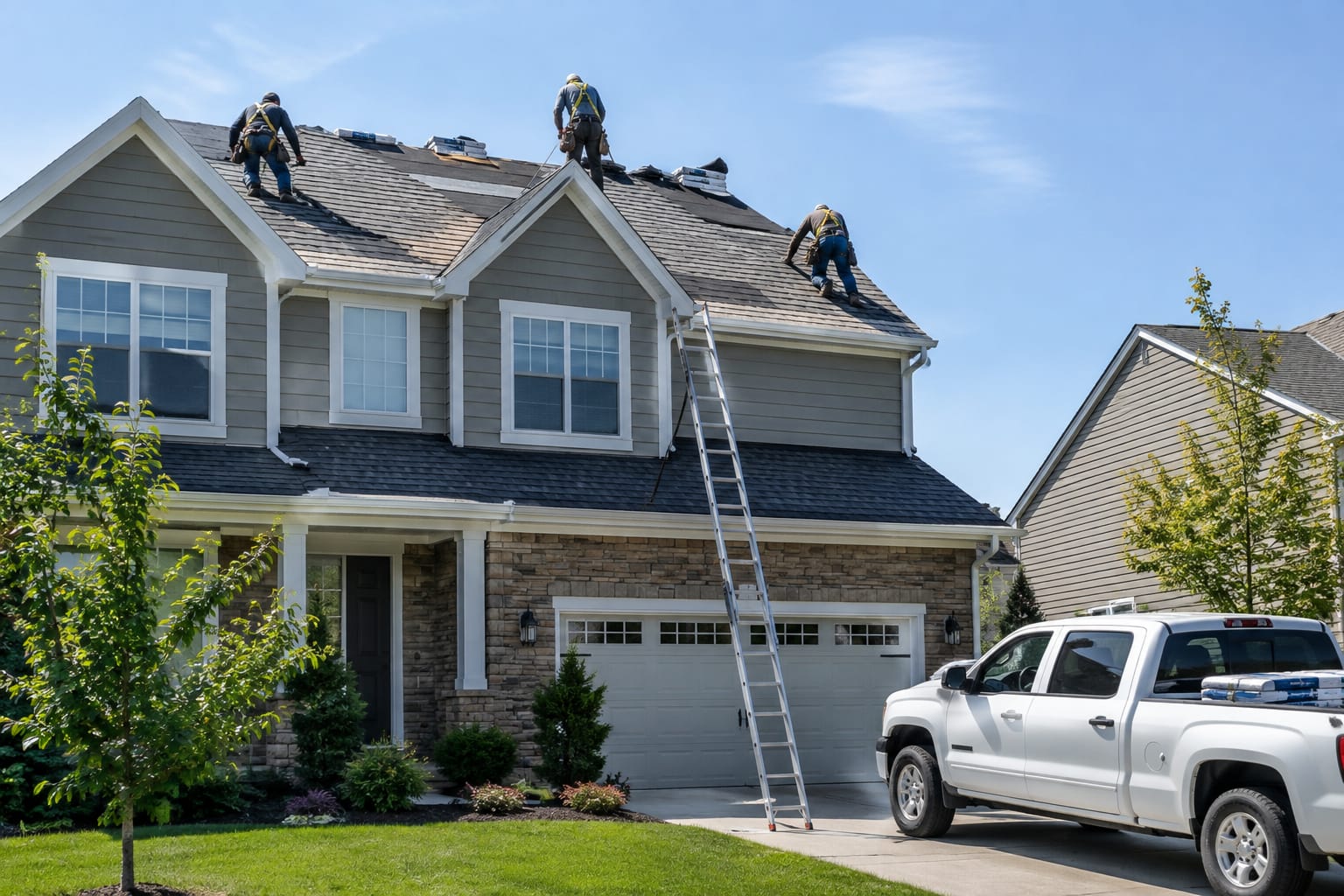
SEO for roofing companies means getting your business in front of homeowners at the moment they search for a roofer: on the Google map, in the regular results, and more and more often inside AI-generated answers. Three things drive most of those calls. The first is a complete Google Business Profile that earns a place in the map pack. The second is service and area pages that match what people type. The third is a steady flow of genuine reviews.
Most roofing owners already know SEO matters. The hard part is knowing what to do first when the working day happens on a roof. This guide gives a priority order and a version of each step you can finish in one evening. It ends with a plain comparison of what roofing SEO costs in time and money. If search engine optimization is new to you, this plain-language explanation of what SEO is covers the basics.
Roofing SEO priority list
- Complete and verify your Google Business Profile. It feeds the map pack, where many urgent local searches end.
- Build a review habit. Ask every customer after every job, and reply to every review.
- Fix website basics. Make the site work on a phone, load quickly and offer a tap-to-call number.
- Create one strong page per core service. Cover repair, replacement, storm damage, inspections and each material you install.
- Add area pages only where you genuinely work. Write one useful page per real service area. Never publish copies with only the town name swapped.
- Publish answers to homeowner questions. Cover costs, insurance, materials and timelines.
- Track the map pack and AI answers monthly. Measure calls and booked inspections, not just rankings.
Key Takeaways
- Two search moments. Emergency leaks are won by the Google Business Profile and its call button. Planned replacements are won by detailed service pages and job photos.
- Profile first. Google ranks map-pack listings on relevance, distance and prominence. A complete profile with an accurate category, service area and hours improves relevance.
- Ask every customer for a review. Google's policy bans incentives for reviews and asking only happy customers. Asking everyone in the same way is the safe system.
- No city-swapped pages. Google's spam policies treat near-duplicate town pages as doorway pages. Build one useful page per real service area.
- AI search uses the same foundations. Google says AI Overviews have no extra requirements beyond standard SEO best practices. Consistent facts and direct answers help across AI tools.
How Homeowners Search for a Roofer: Emergency Repairs vs Planned Replacements
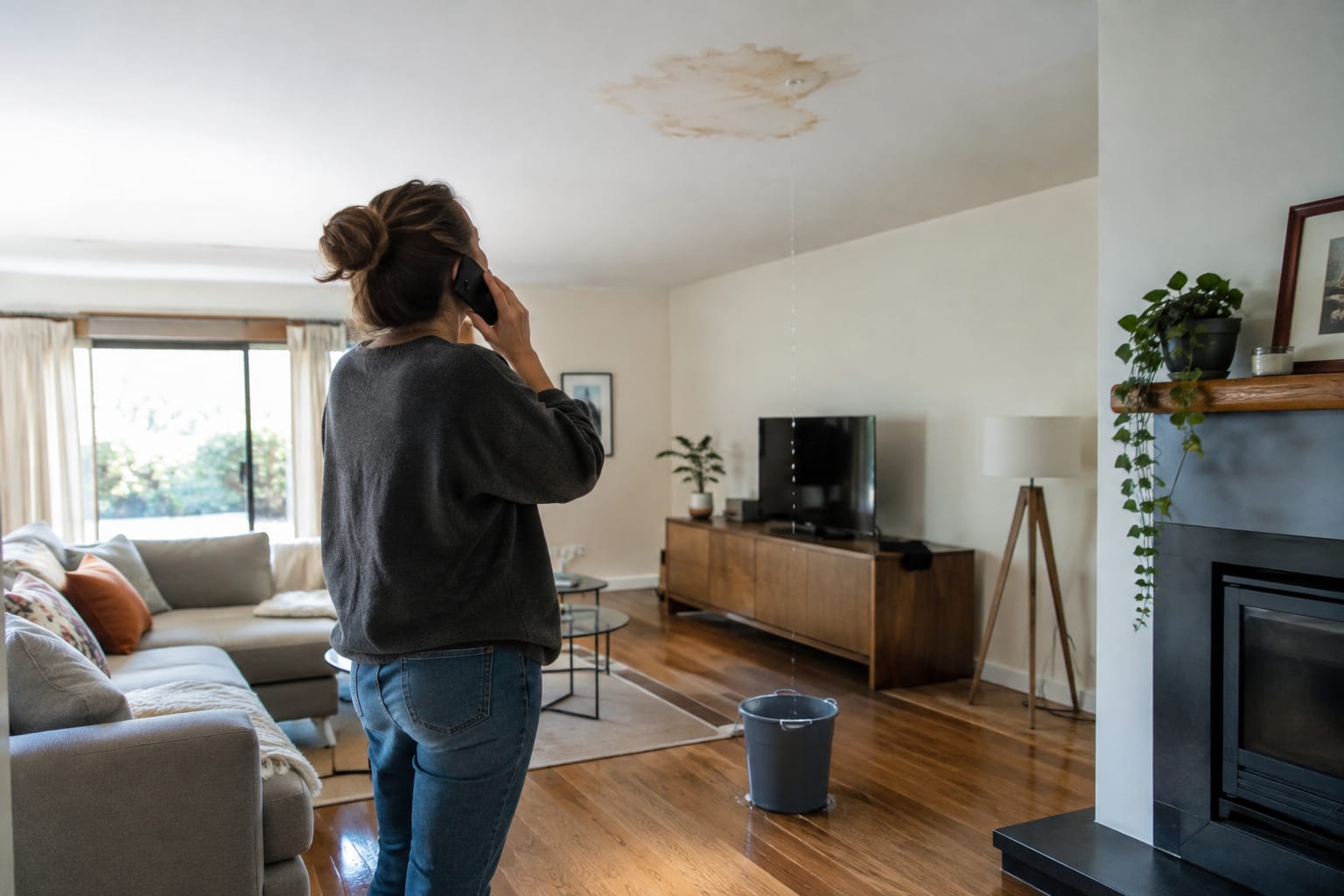
Roofing searches come from two very different moments. A homeowner with water dripping through the ceiling wants someone today and calls one of the first businesses they see. A homeowner planning a replacement researches for weeks. They compare materials, read reviews and often check with their insurer before booking an inspection.
Each moment needs a different answer. The emergency searcher decides in seconds, based on the map listing, the star rating and the call button. The replacement researcher reads your pages, looks at job photos and judges whether you explain things honestly.
| Search type | What the homeowner needs to see | Page or profile that should answer it |
|---|---|---|
| Emergency leak ('roof repair near me', 'emergency roofer') | You are open now, nearby and well reviewed, with a call button | Google Business Profile with hours, phone and recent reviews |
| Storm damage ('hail damage roof inspection', 'storm roof repair') | You inspect storm damage, document it and explain next steps | A storm damage service page plus Business Profile updates |
| Planned replacement ('roof replacement', 'metal roof installers') | The materials you offer, your process, the warranties you actually provide and photos of finished jobs | A roof replacement page and material pages with project photos |
| Insurance question ('does insurance cover roof replacement') | A clear, neutral explanation of how claims usually work | A helpful article or FAQ that links to the relevant service page |
Here's the practical takeaway. The Business Profile wins the emergency call, and the website wins the replacement job. A roofer needs both, in that order.
Get Into the Google Map Pack With a Complete Business Profile
Q: What is the Google map pack?
A: It is the group of local businesses, usually three, shown with a map near the top of Google results for searches like 'roofer near me'. According to Google's Business Profile Help documentation, Google ranks these listings on relevance, distance and prominence.
Relevance means how well your profile matches the search. Distance is how close you are to the searcher, and you cannot change it. Prominence reflects how well known your business is, including reviews and mentions across the web.
That leaves relevance and prominence as the parts you control. Start with the profile itself:
- Primary category. Pick the single category that best describes your core business, such as Roofing contractor. Google's guidelines for representing your business ask you to use as few categories as possible to describe your core business. Do not add a category for every service you offer.
- Service area. Most roofers go to customers rather than receiving them at an office. Google lets these service-area businesses hide their address and list the areas they serve instead. Its service area guidance says the overall area should not extend beyond about two hours of driving time from where the business is based.
- Business name. Use your real-world business name. Adding keywords, as in 'Best Roof Repair Dallas', breaks the same guidelines and puts the listing at risk of suspension.
- Hours, phone and services. Accurate hours matter most for emergency searches. List each service you actually perform.
- Photos and updates. Add real job photos, and post short updates after storms or when the season changes.
NAP consistency means keeping your Name, Address and Phone number identical everywhere they appear online, and it supports prominence. Check your website, Facebook page, Better Business Bureau listing, Yelp and supplier directories. A phone number left over from an old office is a common problem and an easy one to fix.

The evening version: Verify the profile, set the primary category, and correct your hours and service area. Upload ten real job photos, then fix any wrong phone numbers on the directories that list you. Checking map positions across a whole service area by hand takes a lot of time, which is why some owners use map-pack tracking and local SEO automation for ongoing monitoring.
Service and Area Pages That Match What Homeowners Type
Your Business Profile links to your website, and that site needs a separate page for each core service. A single 'Services' page that lists repairs, replacements, gutters and skylights gives Google little to match against a specific search. It also gives the homeowner little to read.
A strong service page covers:
- What the service includes and when a homeowner needs it.
- The materials you work with, explained in plain terms.
- How the job runs, from inspection to cleanup.
- Photos from your own jobs, with honest descriptions of where they were taken.
- A phone number and booking option that are easy to find on any screen size.
Area pages are where many roofing sites go wrong. Copying one page and swapping in a different town name dozens of times creates what Google calls doorway pages. Google's spam policies list them as a violation, and a violation can lower rankings for the whole site.
The honest version is one useful page per real service area. Include what is genuinely local: the housing styles there, common roof problems in those neighborhoods, local permit notes and projects you finished nearby. If there is nothing distinct to say about a town, cover it on a shared regional page instead.
Pro Tip: Build area pages in the order you win jobs. Start with the two or three towns that already send the most work, add photos from jobs there, and expand only when you have real projects to show.
The evening version: Write down your top five services and top three towns. Write one solid page for the service that brings in the most revenue. Add one more page each week after that.
Keywords That Bring Roof Jobs, Not Tire-Kickers
Some roofing searches come from people ready to hire, and others come from people who will never call. You can usually tell them apart from the words they use.
Searches from people ready to hire usually name a service plus a place or a sense of urgency:
- 'roof repair near me', 'emergency roof repair [town]'
- 'roof replacement [town]', 'roof replacement cost [town]'
- 'hail damage roof inspection', 'storm damage roofer'
- Material-specific searches such as 'metal roof installer', or 'flat roof repair' for commercial work
- Insurance-related searches like 'roof insurance claim inspection'
Other searches look related but rarely turn into jobs. 'Roofing jobs' and 'roofer salary' come from job seekers. 'How to fix a roof leak yourself' comes from people doing it themselves. Broad terms like 'roof' or 'shingles' are too vague to show what the searcher wants.
You do not need a paid tool to begin. Google Search Console is free and shows the exact searches that already bring visitors to your site. Customer calls are a second source of keywords. Write down the words homeowners use on the phone, then use that same language on your pages.
Give each important search one page. If two of your pages both target 'roof replacement', they compete with each other. Merge them into one stronger page.
Reviews, Job Photos and Proof That Turn Searches Into Calls
Reviews do two jobs at once. They count toward prominence in Google's local ranking. They are also what a worried homeowner reads before deciding which roofer to call.
The safest system is simple. After every finished job, text the customer a direct link to your review form. Ask every customer, not just the happy ones. Google's fake engagement policy prohibits offering incentives for reviews and asking only satisfied customers. In the United States, the FTC's final rule banning fake reviews and testimonials allows penalties for buying or faking reviews.
Q: Can a roofer give customers a discount for leaving a Google review?
A: No. Google's contribution policy bans incentives for reviews, including discounts, and reviews that break it can be removed. Ask every customer in the same way and offer no reward.
Reply to every review, positive or negative. Google's guide to reading and replying to reviews shows how to respond from the profile. A calm, specific reply to a complaint can reassure future customers more than one more five-star rating.
Job photos are the other half of the proof. Before, during and after shots of real roofs show your workmanship in a way text cannot.
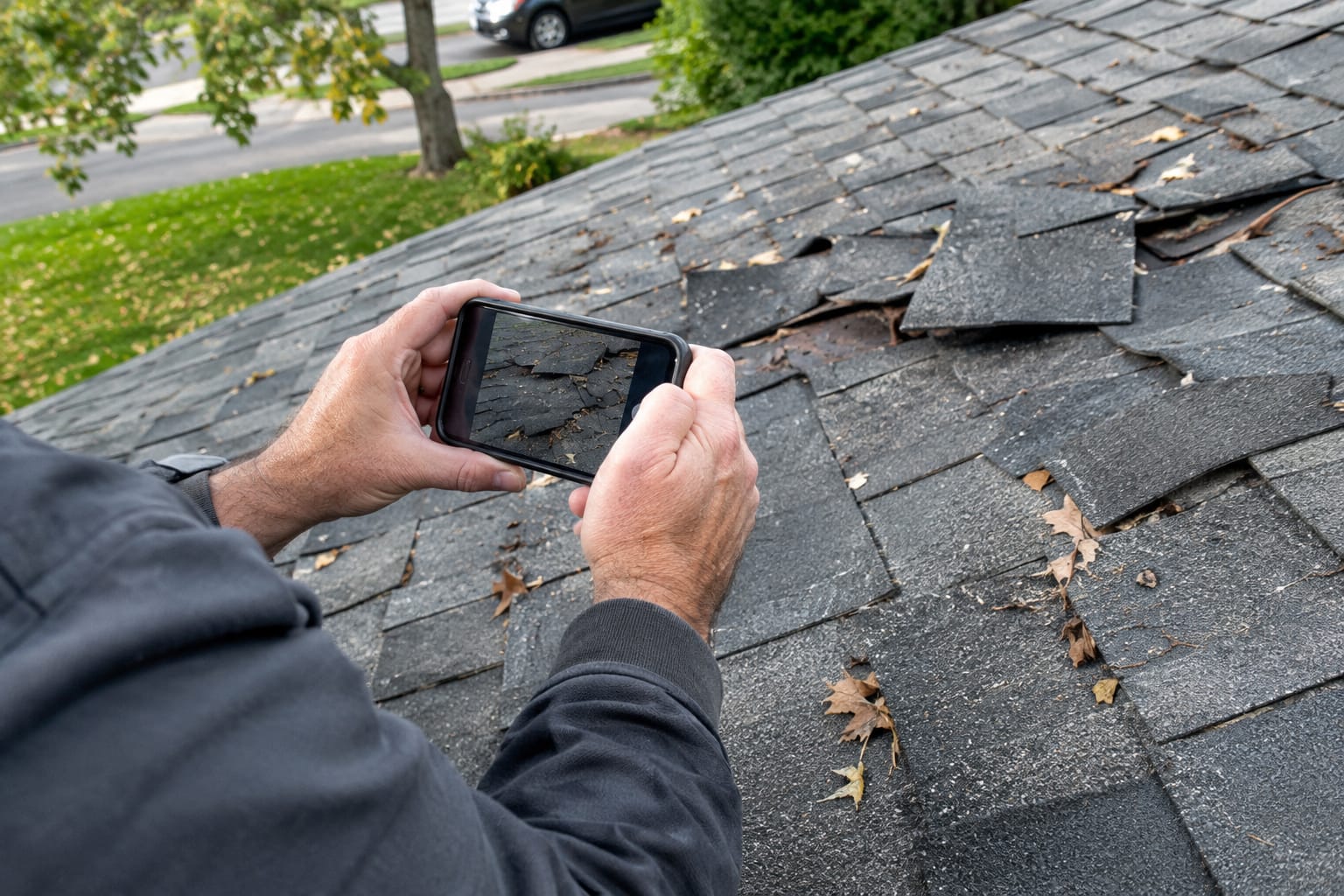
Use photos on the profile, the service pages and the area pages. Give each file a descriptive name and write a short description of what the photo shows. Never present stock photos as your own work. List only the licenses, insurance and warranties you actually hold, and state clearly what each warranty covers.
Website Basics That Lose Roofing Leads: Speed, Mobile and Click-to-Call
Emergency roofing searches often happen on a phone, sometimes while the homeowner stands under the leak. Google uses the mobile version of a site to index and rank it, as its mobile-first indexing documentation explains. A slow or awkward mobile site costs you both rankings and calls.
Check these basics:
- A tap-to-call number at the top of every page, set up so that tapping it starts a call.
- A short contact form asking only for name, phone, address and the problem. Long forms lose urgent callers.
- Fast loading. Large job photos that have not been compressed are the usual cause of slow pages. Google's Core Web Vitals guidance explains how it measures loading speed, responsiveness and whether the page jumps around while it loads.
- Text and buttons that are readable on a phone without zooming.
- Business details that match your Business Profile exactly.
- LocalBusiness structured data, which is code that tells search engines your business name, phone number and other details. Google's local business markup guide shows how to add it.
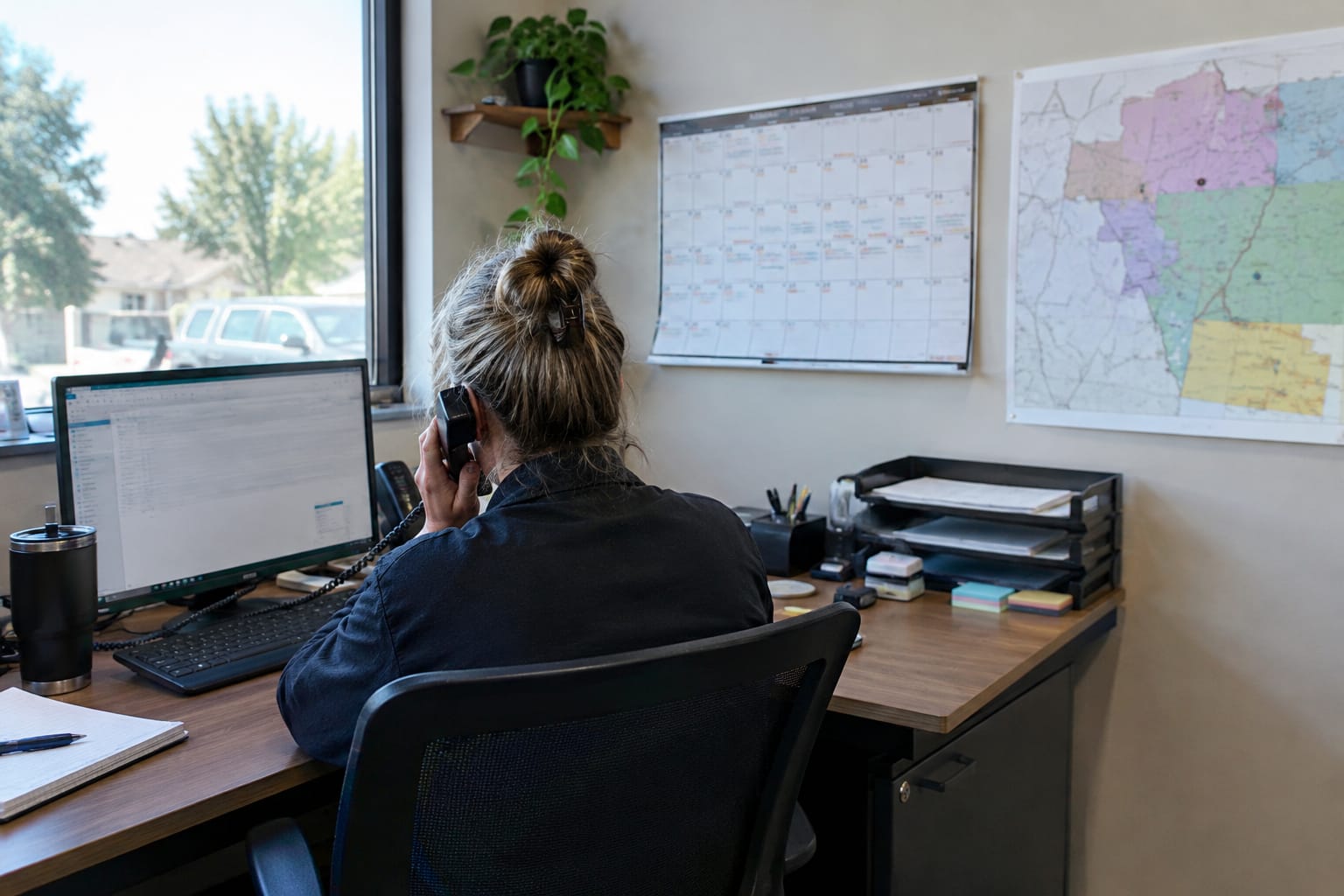
The phone matters as much as the website. If nobody answers when a homeowner calls, the ranking that produced the call has been wasted. Send after-hours calls to a mobile phone, an answering service or a clear voicemail that says when you will call back.
The evening version: Open your site on your own phone and try to call from the top of the home page. Then fill in and submit the contact form. After that, run a free one-minute check of your roofing website to find technical problems such as slow pages, missing page titles or broken links.
Showing Up When Homeowners Ask ChatGPT or AI Overviews for a Roofer
More homeowners now put questions like 'who are good roofers near me' or 'should I repair or replace an old roof' to AI tools. The answers come from Google AI Overviews, ChatGPT, Perplexity and Gemini. These tools summarize information from across the web and often name specific businesses.
The good news is that the foundations are the same. In its guidance on AI features and your website, Google says there are no extra requirements to appear in AI Overviews beyond standard SEO best practices. The profile, pages and reviews covered above do most of the work.
A few habits make it easier for AI tools to describe a roofing business accurately:
- Use the same facts everywhere. Keep your name, phone number, service areas and services identical on your site, Business Profile and directories.
- Put direct answers on your pages. Open each section with a one- or two-sentence answer, then explain. A clear statement of what a roof inspection includes is easier for an AI tool to quote than a page of slogans.
- Answer real questions. Cover what homeowners ask about: repair versus replacement, insurance claims, how long different materials last and what an inspection involves.
- Get reviews with specifics. Reviews that mention the service and the town give AI tools concrete details to cite.
This practice is often called generative engine optimization (GEO).
You can measure it with a simple test. Before you publish a new page, ask ChatGPT, Perplexity and Google a handful of questions that homeowners in your area actually ask, and note which businesses get named. Ask the same questions again at four weeks and at eight weeks, and record what changed. No one can guarantee that an AI tool will mention your business, but tracking it shows whether your work is having an effect.
DIY, Agency or Autopilot: What Roofing SEO Costs in Time and Money
Roofing SEO costs you time, money or both. The three common ways of doing it balance those costs differently.
| Approach | Owner's time | Monthly cost | Best fit |
|---|---|---|---|
| Do it yourself | Several hours a week, every week | Free tools; the real cost is your time | Owners who like writing and have free evenings |
| Agency retainer | A few hours a month for calls and approvals | Usually the largest marketing line item of the three | Larger roofing firms with a marketing budget and someone to manage the agency |
| Autopilot AI software | Initial setup, then an occasional review | A monthly software subscription | Owners who want SEO done consistently without hiring or managing anyone |
Doing it yourself works if you stay consistent, and that is the catch. Roofing demand peaks in storm season and summer, which are the months when owners have the least spare time. Content and review requests stop at exactly the moment they matter most.
An agency takes the work off your plate, but you still have to manage the agency. Ask what it will deliver each month and who writes the content. Ask whether you will own the website and the Business Profile. Ask how it reports calls, not just rankings. Avoid long lock-in contracts with vague deliverables.
Automation software runs SEO audits, content and rank tracking on a schedule without someone doing each step by hand. One example of what steady automated publishing can achieve is a Boston moving company's local search results. It is a moving company, not a roofer. According to its Google Search Console data, organic clicks rose from about 770 a month in February 2026 to about 1,925 a month in July 2026, while 119 articles were published automatically. A roofing business's results will depend on its own market, its competitors and where its site starts.
Roofers who want to see how the automated approach applies to their trade can look at SEO for roofers on autopilot and weigh it against the DIY and agency options above. Whichever approach you choose, judge it by one measure: more calls and booked inspections from search.
Useful Links
- SEO for Roofers — how automated SEO is set up for roofing contractors.
- Local SEO Automation: Win the Google Map Pack — Business Profile, citation and map-pack tracking explained.
- Free SEO Checker: Website SEO Audit in 1 Minute — a quick technical check of any website.
- GoBorn Case Study: Booked Out by Search and Cited by AI — a Boston moving company's organic growth from automated content.
Need help with this? Local SEO Automation · Get started
Часті запитання
How long does SEO take to bring roofing leads?
Is SEO better than buying shared roofing leads?
Can I respond to storm-damage searches without spammy pages?
Хочете, щоб це робилось за вас — щодня?
Підключіть сайт — і SERP Agent веде аудит, контент і публікацію на автопілоті.