AI SEO Service in Practice: 150% More Organic Clicks in Six Months
A real AI SEO service case study: a Boston moving company grew organic clicks 150% in six months, with the full baseline, article count, position data and cost.
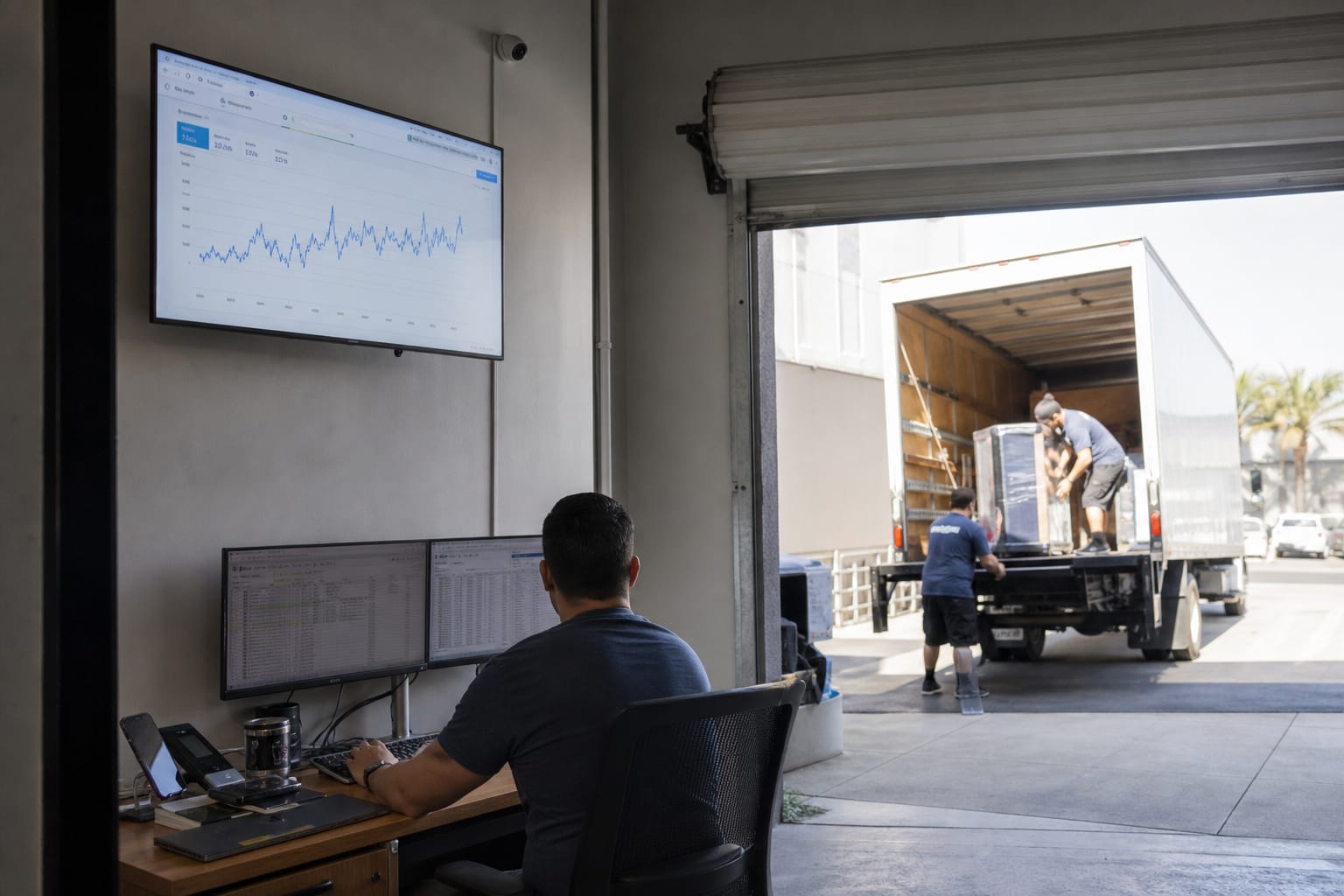
An AI SEO service took a Boston moving company from 770 organic clicks a month to 1,925 in six months — a 150% increase measured in Google Search Console, published fully autonomously. That number comes from monthly Search Console snapshots, not a pitch deck. Most "AI SEO service" pages you'll find promise growth without a baseline, a date range, or an article count. This one publishes all of it — including what a single case study does not prove.
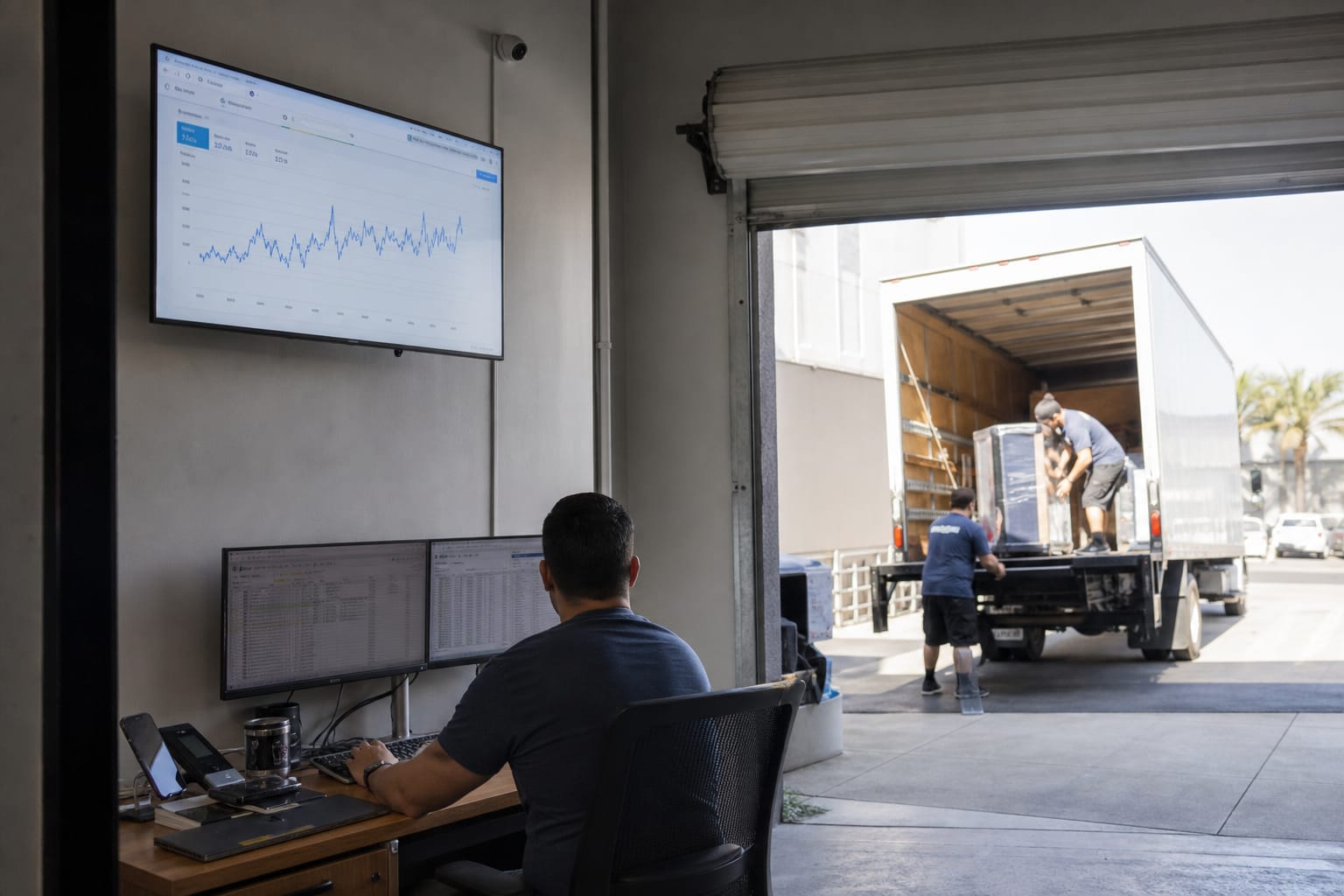
The result, stated plainly — and what it doesn't prove
Here is the full data object, with its source and query date, so you can quote it or check it.
| Field | Value |
|---|---|
| Client | GoBorn (Boston moving company, B2C) |
| Service | Autonomous AI SEO service by SERP Agent |
| Period | February 2026 → July 2026 (6 months) |
| Baseline organic clicks | 770 / month |
| Ending organic clicks | 1,925 / month |
| Change | +150% |
| Impressions | 310K → 543K / month |
| Average Google position | 28.7 → 16.4 (13.9 by August) |
| Articles published | 119, fully automated |
| AI citations | 1,328 verified across 1,475 brand mentions |
| Measurement source | Google Search Console + AI visibility tracker, queried 20 Aug 2026 |
What this proves: an autonomous pipeline can research, write, QA and publish at volume and move real Search Console metrics. What it does not prove: that every vertical behaves this way. This is one site, one industry, no control group. Read the numbers as a documented data point, not a universal law.
The starting point: a Boston moving company at 770 clicks a month
GoBorn is a full-service residential mover competing in a crowded local market. In February 2026 the site pulled 770 organic clicks a month against 310K impressions, sitting at an average Google position of 28.7 — effectively page three. That gap between impressions and clicks is the classic sign of a site Google shows but rarely rewards.
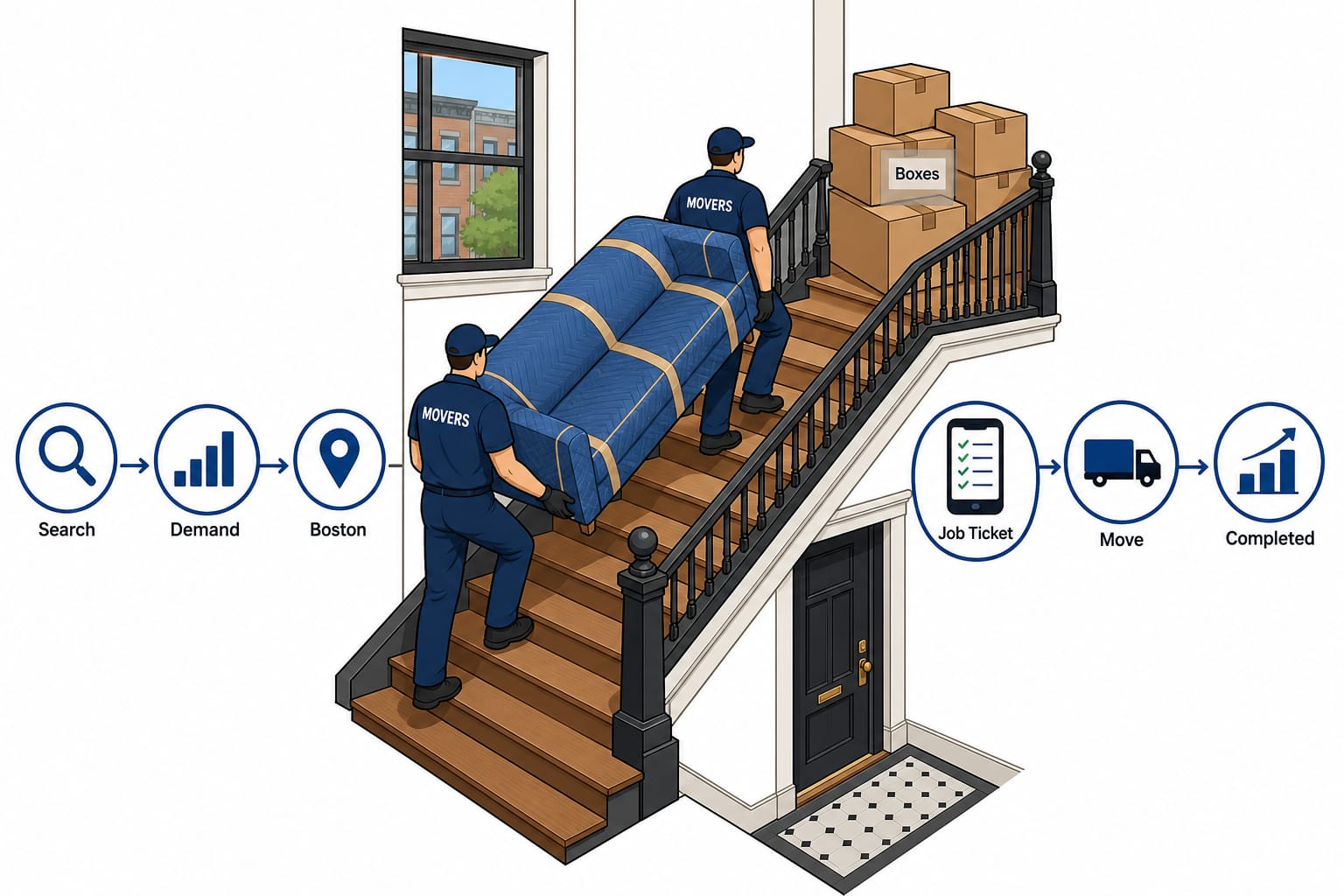
The demand was real. People search "movers near me," "how much does a local move cost," and "do I need a full-service mover" every day in Boston. GoBorn simply wasn't ranking where those searches resolve.
What an AI SEO service actually runs each day
A true autonomous SEO service isn't a content button. It runs an ordered pipeline: a technical audit, keyword and intent research, drafting, a QA gate, and daily article publishing on autopilot straight to the site.
For GoBorn, that meant a 36+ check SEO audit feeding a topical plan, then articles generated and pushed to WordPress without a human staging each post. The system re-audits, spots gaps, and fills them — a growth loop rather than a one-off content drop.
Q: Can an AI SEO service publish to WordPress automatically?
A: Yes. SERP Agent published all 119 GoBorn articles directly to the live site with no manual staging, per the SERP Agent product pipeline.
The point is unattended volume without a person copy-pasting drafts. That's what separates an autonomous service from a writing tool with an SEO label.
Capturing DIY-move searches: the strategy that mattered
The single most valuable strategic call was intent redirection. A large slice of moving demand starts as DIY research — "U-Haul truck size," "PODS vs renting a truck," "how to move a couch upstairs."
The pipeline built articles that answered those DIY questions honestly, then framed full-service moving as the lower-stress option for the reader's specific situation. That converts high-volume informational traffic toward a commercial outcome instead of chasing only "movers near me," which every competitor already bids on.

Serp Agent can help: We run the full audit-to-publish SEO pipeline autonomously, so your site ships researched, QA-checked articles every day without a content team. Learn more →
Month by month: impressions, clicks, and average position
The movement was directional and steady across the window, not a single spike. Below are the verified endpoint snapshots from the full GoBorn case study; intermediate months are not invented here.
| Metric | Baseline (Feb 2026) | Latest (Jul 2026) | Direction |
|---|---|---|---|
| Organic clicks / month | 770 | 1,925 | +150% |
| Impressions / month | 310K | 543K | up sharply |
| Average Google position | 28.7 | 16.4 | page 3 → page 2 |
| Average position (Aug) | — | 13.9 | still improving |
Impressions climbing from 310K to 543K a month came first — Google surfacing the new content — followed by clicks as positions crossed into page two. That order is normal and worth expecting.
Q: How long does an AI SEO service take to work?
A: GoBorn's clicks rose from 770 to 1,925 per month across six months (Feb–Jul 2026), with impressions moving earliest; meaningful traction took months, not days.
119 articles, no human in the loop — how quality held
Unattended publishing at volume only works if the quality gate is strict. GoBorn's 119 articles cleared several automated controls before going live.
Those controls include a niche guard (kills off-topic drafts), an ICP audience filter, QA scoring with a hard publish bar, cross-plan de-duplication so two articles never chase the same intent, brand-safety checks, and self-healing regeneration when a draft fails the bar. Nothing publishes just because it was written.

Pro Tip: When evaluating any autonomous SEO service, ask what happens to a draft that fails QA. If the answer is "it publishes anyway" or "a human fixes it," it isn't truly autonomous or truly safe.
Try Serp Agent's autonomous publishing: Ship dozens of QA-gated, de-duplicated articles a month on autopilot — with a hard quality bar that blocks anything below it. Get started →
The AI-visibility layer: 1,328 citations in AI answers
Here's the metric almost no competing case study reports: whether AI engines cite the site. Search Console tells you about Google's blue links; it says nothing about Google AI Overviews or ChatGPT.
Across the same window, an AI visibility tracker logged 1,328 verified citations of GoBorn inside AI answers, spanning Google AI Overviews and ChatGPT, across 1,475 brand mentions. That means the content wasn't only ranking — it was being quoted as a source by the assistants people now ask first.

Q: How do you know whether ChatGPT is citing your site?
A: SERP Agent's AI visibility tracker logs each citation; for GoBorn it recorded 1,328 verified citations across 1,475 brand mentions, queried 20 August 2026.
This is the layer to demand from any modern service. Ranking and being cited by AI are now two separate wins.
A second data point: a B2B SaaS on the same pipeline
One case in one vertical isn't enough, so here's a second — a different audience entirely. Virtual Estimate is a moving-CRM SaaS selling to businesses, running the identical autonomous pipeline.
From March to July 2026, the Virtual Estimate B2B results show impressions growing from 1,786 to 38,601 a month, clicks from 5 to 87, and average position improving from 28.5 to 13.5 — off 169 automatically published articles. The tracker recorded 56 verified ChatGPT citations on high-intent B2B queries, and the client reports paying customers who found them through ChatGPT.
Two verticals, two audiences, same machine. B2C local service and B2B software both moved.
What it costs, and the maths per article
The pricing is public and flat: $199 and $299 per month per website for the Standard and Pro plans, billed per project, cancel anytime. There's no per-article surcharge.
Run the arithmetic. On the Standard plan at $199/month over six months, GoBorn's 119 published articles work out to roughly $10 per finished, QA-checked, auto-published article — research, writing, and publishing included, per SERP Agent's published pricing. A freelance writer rarely touches that unit economics, and won't publish autonomously.
Q: How much does an AI SEO service cost per month?
A: SERP Agent lists $199/month (Standard) and $299/month (Pro) per website, with monthly billing and cancel-anytime terms, per its live pricing page.
What to replicate — and the honest caveats
If you run this yourself, four things did the heavy lifting: a strict pre-publish QA bar, intent redirection from DIY searches toward your service, consistent daily publishing rather than batches, and tracking AI citations separately from Google clicks. Skip any one and the result weakens.
Now the caveats, because they matter. Impressions moved before clicks, so the first weeks looked quiet. The gains are correlation within a live account, not a controlled experiment — no A/B holdout existed. And both cases sit in or around the moving industry; a YMYL vertical like health or finance would face stricter scrutiny and likely a slower curve. Treat these numbers as evidence, not a guarantee.
Key takeaways
- Real, sourced result: GoBorn grew organic clicks 150% (770 → 1,925/month) in six months, verified in Google Search Console.
- Volume with a gate: 119 articles published autonomously, each cleared a hard QA bar, de-duplication and brand-safety checks.
- AI visibility counts separately: 1,328 verified AI-answer citations show the content was quoted, not just ranked.
- It generalizes at least once: a B2B SaaS on the same pipeline grew impressions from 1,786 to 38,601/month.
- Transparent cost: flat $199–$299/month per site works out to roughly $10 per published article for GoBorn.
Related Articles
- How AI Search Is Rewriting the Rules of SEO in 2026 — why ranking and being cited by AI are now two different goals.
- How to Read Google Search Console Like an Analyst — turn impressions, clicks and position into decisions, as used in this case study.
- Topic Clusters That Actually Convert Visitors — how to structure content so informational traffic drives commercial outcomes.
- SEO Optimization Services — what a modern SEO engagement includes and how automation fits in.
Useful Links
Want this done for you — every day?
Connect your site and SERP Agent runs the audit, the content and the publishing on autopilot.