AI SEO Tool: What It Does and Where It Outperforms Manual SEO
A practical guide to what an AI SEO tool does, where it beats manual SEO, where humans still win, and what six months of automated publishing actually produced on live sites.

An AI SEO tool is software that uses large language models and live search data to automate SEO work — keyword research, content creation, on-page optimisation, and technical checks. The most advanced versions, called AI SEO agents, research, write, quality-check, and publish articles automatically with no manual step.
That definition sounds simple. The hard part is knowing where automation genuinely beats manual work, where it still falls short, and what results look like once the tool runs on a real site. This guide grades the category honestly and shows a full six-month before-and-after from two live clients.

What an AI SEO Tool Is — and What Separates It From a Traditional Suite
A traditional SEO suite — think Ahrefs, Semrush, or Moz — gives you data and dashboards. You read the reports, then do the writing, editing, and publishing yourself. The software informs the work; a human still performs it.
An AI SEO tool performs the work. It turns a keyword into a researched draft, applies on-page structure, and in the strongest tier pushes the finished page to your CMS. The difference is execution, not just insight.
That shift matters because SEO output has always been the bottleneck. Knowing you need 40 articles on a topic cluster is easy. Producing them at a publishable standard, week after week, is where most teams stall. For a fuller definition of the category, see our glossary entry on AI SEO.
Q: What is the difference between an AI SEO tool and a traditional SEO suite?
A: A traditional suite (Ahrefs, Semrush) reports data for a human to act on; an AI SEO tool executes the work itself — writing, optimising, and in agent-tier products, publishing.
The Five Jobs AI SEO Tools Take On
Most AI SEO software clusters around five jobs. Not every tool does all five, and the ones that do vary widely in quality.
- Keyword and topic research — mapping demand, clustering intent, and prioritising what to write next.
- Content creation and optimisation — drafting articles and shaping headings, structure, and internal links for a target query.
- Technical and on-page audits — flagging broken links, thin pages, missing metadata, and crawl issues.
- Publishing and internal linking — pushing finished pages to a CMS such as WordPress and wiring them into the site's link graph.
- AI-search visibility tracking — measuring citations inside Google AI Overviews, ChatGPT, Gemini, and Perplexity, not just blue-link rankings.
The first three are common. Jobs four and five separate genuine automation from a fancy writing assistant. A tool that drafts but cannot publish still leaves the slowest step on your desk.
Where AI Clearly Outperforms Manual SEO
AI wins decisively on volume, consistency, and speed. A person writes a few good articles a week. An AI SEO agent researches, writes, and publishes at a pace no small team can match, and it does not skip a week when someone takes leave.
It also wins on breadth of monitoring. Tracking your visibility across Google, ChatGPT, Gemini, and Perplexity by hand is impractical. Automated tracking watches every surface continuously and surfaces where you are — and are not — being cited.
The third advantage is compounding. Topical authority builds when a site covers a subject comprehensively and keeps adding depth. Automation makes that steady accumulation realistic instead of aspirational.

Pro Tip: Volume only compounds when every published page clears a quality bar. Ten strong articles beat forty thin ones, because thin pages dilute topical authority instead of building it.
Where Manual Work Still Wins
AI does not win everywhere, and any vendor claiming otherwise is selling. Original research — surveys, proprietary data, first-hand interviews — is human work. A model can format a study; it cannot run one.
Brand voice at the edges also stays human. Executive thought leadership, strong opinions, and sensitive or regulated claims need a person who owns the reputation attached to them. So does high-stakes strategy: deciding to enter a new market or reposition a product is judgement, not pattern completion.
Relationships fall outside automation too. Digital PR, partnerships, and earned links come from people talking to people. The honest split: AI handles the scalable, repeatable middle of SEO exceptionally well, and leaves the top and bottom of the work to humans.
Serp Agent can help: Serp Agent runs the repeatable middle — research, writing, QA, and publishing — automatically on your live site, so your team keeps the strategy and voice. Learn more →
Assistant, Copilot, or Agent: Three Levels of Automation
The word "AI" hides three very different products. Grading them by how much work you still do makes the buying decision clear.
| Level | Defining test | What it actually does |
|---|---|---|
| Assistant | You do the work; it suggests | Generates keyword ideas, outlines, meta tags, and drafts on request |
| Copilot | It drafts; you approve every step | Produces full articles and optimisations you review and publish manually |
| Agent | It runs the loop unattended | Researches, writes, QA-checks, and publishes on a schedule with no manual step |
Most tools marketed as "AI SEO software" are assistants or copilots. That is fine — but you are still the publisher, and your throughput is capped by your review time. An agent removes that cap, which is why the quality controls behind it matter so much.
Q: What is an AI SEO agent?
A: An AI SEO agent is the top automation tier — it researches, writes, quality-checks, and publishes content on a schedule without a manual step, unlike assistants or copilots that require human action to move each piece forward.
The Quality Question: What Keeps Automated Content Publishable
Unattended publishing only works if the quality system is stricter than a human editor. Without guardrails, automation just scales mistakes faster. The controls are what make the difference between a content farm and a credible site.
A production-grade pipeline runs several gates before anything goes live. A niche guard keeps articles on-topic. An ICP audience filter checks the piece speaks to the right buyer. A QA scoring step applies a hard publish bar, so anything below the threshold never ships. Cross-plan de-duplication stops two articles competing for the same query, and brand-safety checks screen sensitive claims.
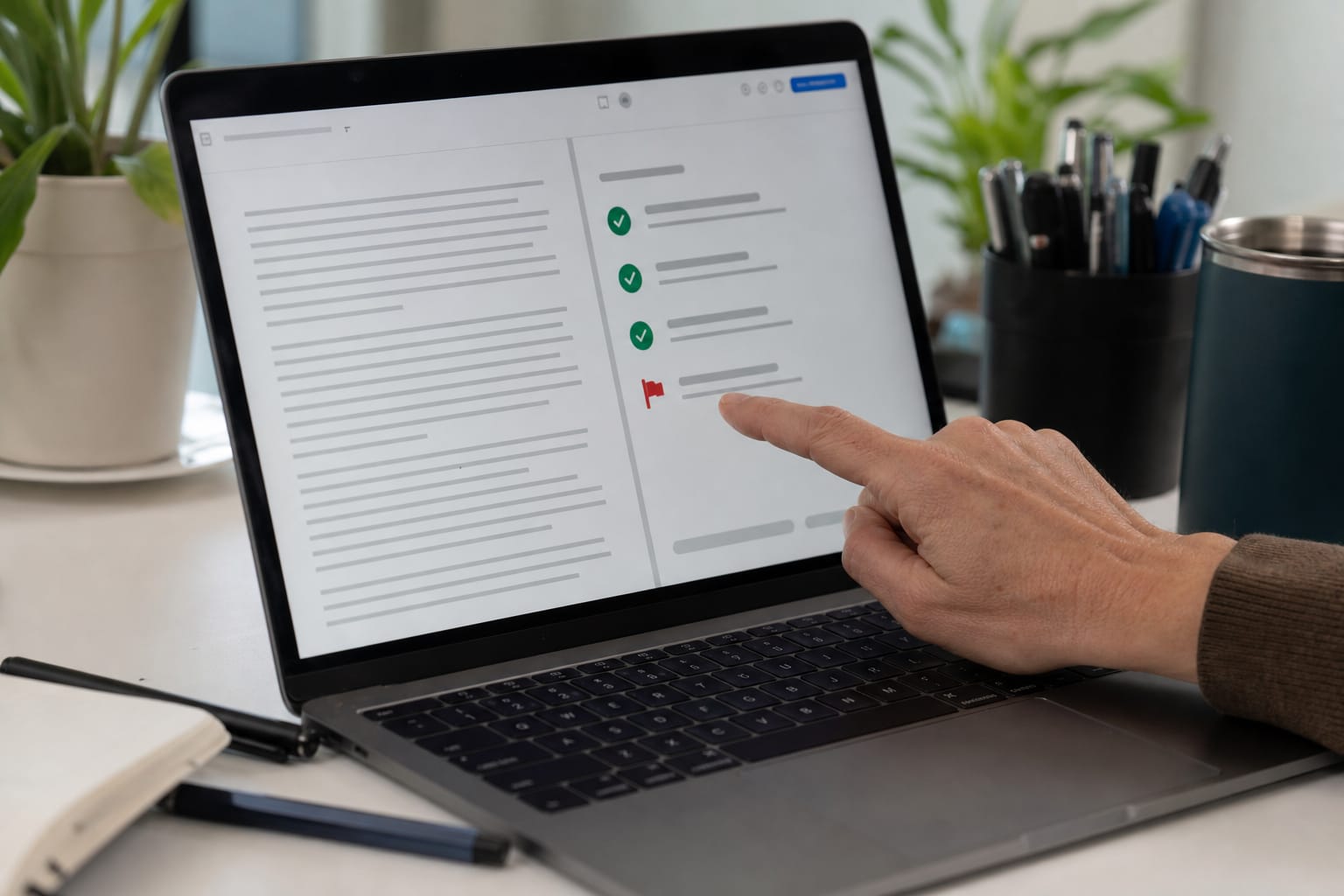
When an article fails a gate, self-healing regeneration rewrites it rather than dumping a broken draft on a human. Serp Agent runs exactly this stack unattended on live client sites, which is the reason automated publishing produces growth instead of a cleanup job. On whether search engines accept the output, Google's own guidance on AI-generated content rewards helpful, people-first content regardless of how it is produced, and penalises low-value content whether written by a human or a machine.
Q: Will Google rank AI-generated content?
A: Yes. Per Google Search Central, ranking depends on whether content is helpful and demonstrates E-E-A-T, not on whether AI produced it; low-value content is penalised regardless of author.
What Results Look Like Over Six Months
Capability is easy to describe. Outcomes are harder, which is why most reviews skip them. Here are two live cases, each reported with start value, end value, date range, and evidence source.
GoBorn, a Boston moving company (B2C), grew organic clicks from 770/month in February 2026 to 1,925/month by July 2026 — a 150% increase in six months, fully autonomous. Impressions rose from 310K to 543K/month, and average Google position improved from 28.7 to 16.4. The system researched, wrote, QA-checked, and published 119 articles automatically and earned 1,328 verified AI citations across 1,475 brand mentions. Evidence: GSC monthly snapshots and AI-visibility tracker, queried 2026-08-20. You can read the GoBorn results in detail on its case page.

Virtual Estimate, a moving-CRM SaaS (B2B), started closer to zero. As a B2B SaaS example, its organic impressions grew from 1,786/month in March 2026 to 38,601/month in July 2026 — roughly 21x — while clicks rose from 5 to 87/month and average position improved from 28.5 to 13.5. The agent published 169 articles automatically and produced 56 verified ChatGPT citations on high-intent B2B queries, with the client reporting paying customers who found them via ChatGPT. Same evidence source and query date.

Notice the honest detail: clicks and average position move on different curves. Position climbs first as pages get indexed and ranked; clicks follow as those rankings reach the top of page one. Anyone promising instant traffic is skipping how the mechanism actually works.
What AI SEO Tools Cost and How to Read the Pricing
AI SEO tool pricing usually runs per website per month, and the number you see rarely tells the whole story. The real question is what the price includes: research only, drafting, or full publishing.
An assistant that only suggests is cheaper, but you still pay for the writer, editor, and publisher — usually yourself. An agent that publishes folds those roles into the subscription. Compared to a single freelance writer or an agency retainer, agent-tier pricing is often the lower total cost once you count the human hours it replaces.
As a concrete reference point, Serp Agent publishes flat pricing at $199 and $299 per month per website, billed per project, cancel anytime. When you compare tools, normalise everything to cost per published, indexed article — not per seat or per credit — because that is the unit that actually grows traffic.
Q: How much does an AI SEO tool cost for a small business?
A: Full-service AI SEO tools typically run per website per month; Serp Agent's plans are $199 (Standard) and a noticeable amount (Pro) per website, billed per project with cancel-anytime terms — see its pricing page.
How to Evaluate One Before You Commit
Run the same four checks on every shortlist candidate. First, ask which automation level it really is — assistant, copilot, or agent — using the defining test in the table above. Second, ask to see outcomes, not screenshots of features: a real before-and-after with dates and a named evidence source.
Third, inspect the quality system. If a vendor cannot explain its publish bar, de-duplication, and failure handling, do not let it publish unattended. Fourth, confirm it tracks AI-search visibility — citations in AI Overviews, ChatGPT, Gemini, and Perplexity — because answer engine optimisation is now part of the job, not a nice-to-have.
For a side-by-side of the category, our roundup of the best AI SEO tools in 2026 applies these same tests across vendors. Use it to pressure-test any single tool's claims before you sign.
Key Takeaways
- Execution, not just data. An AI SEO tool performs SEO work — writing, optimising, publishing — where a traditional suite only reports on it.
- Grade the automation. Assistant, copilot, and agent are three different products; only an agent removes the review-time bottleneck.
- Quality gates decide the outcome. Niche guards, a hard QA publish bar, de-duplication, and self-healing regeneration are what keep automated content publishable.
- Results move on two curves. GoBorn's average position improved from 28.7 to 16.4 while clicks rose 150% over six months; position leads, clicks follow.
- Humans still own the edges. Original research, executive voice, high-stakes strategy, and relationship-driven links stay manual.
Related Articles
- How AI Search Is Rewriting the Rules of SEO in 2026 — why answer engines change what "ranking" means and how to adapt.
- How to Read Google Search Console Like an Analyst — turn GSC data into decisions about what to publish next.
- Topic Clusters That Actually Convert Visitors — structure content so topical authority compounds into leads.
- SEO Optimization Services — how done-for-you SEO differs from tools you operate yourself.
Useful Links
- AI SEO Agent — SEO That Never Stops Working
- Best AI SEO Tools in 2026 — Compared Honestly
- SERP Agent Pricing — $199 & $299/mo, Cancel Anytime
- SEO Case Studies: Real Client Growth
- AI SEO — Definition & How It Works
Need help with this? Get started
Want this done for you — every day?
Connect your site and SERP Agent runs the audit, the content and the publishing on autopilot.